Get 08 expert PUBG betting tips from professional bettors, covering team form, player statistics, odds, and budgeting, plus a trusted place to play in Malaysia.
PUBG matches can swing on a single circle, which makes betting on them tricky for newcomers. Before you place a wager, it helps to understand how teams score and what separates a consistent squad from a lucky one. This guide breaks down the key points to check.
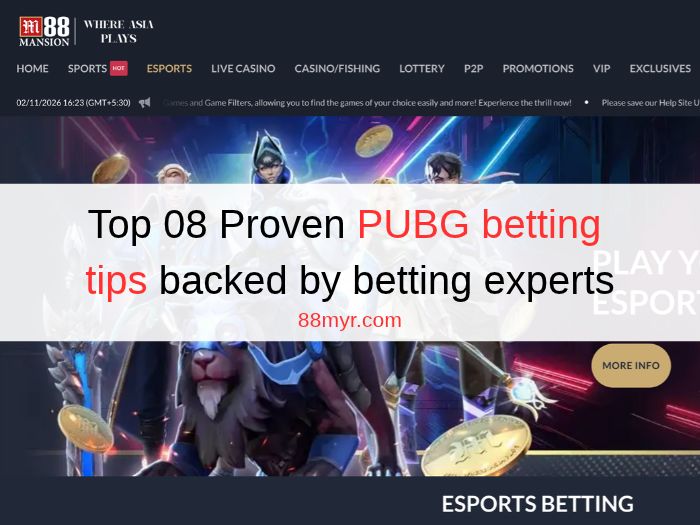
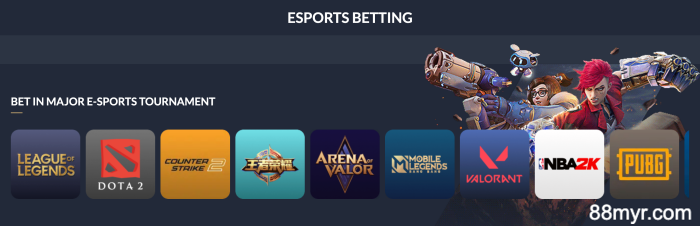
Esports betting at M88 Sportsbook in Malaysia
Top 08 PUBG betting tips to make smarter bets
Use these 08 PUBG betting tips in the order you’d place a real bet. They cover team and player research first, then odds and markets, and end with budget control. For more guides, see our M88 betting tips.
#1. Research recent team performances before betting
A team’s old trophies say little about how it plays today, so start with its last 5 to 10 matches. Look at where the squad finished, how many kills it picked up, and whether it reached the late circles. Results from a recent event on the same patch and map pool are far more useful than a win from last year. One strong game can also hide weak form, so never judge a team by a single match.
Research recent team performances before betting on PUBG
Tournament standings show how a team is performing over a full event, not just in one game. Teams chasing a qualification spot often play differently from teams that are already safe, so check what each side still needs before you back it. A squad fighting to stay alive may take bigger risks, while a team with a comfortable lead may play for placement. Reading that situation gives you an edge over bettors who only look at the rankings.
Consistency is what separates a pick from a lucky one. Look for teams that finish in the upper half most of the time, not teams that swing between first place and last. A squad that recovers well after a poor first game is usually a steadier bet than one that falls apart. Steady results across many matches matter more than one big win.
#2. Analyse individual player statistics and contributions
Rankings show the final result, not who earned it. Check each player’s kills and damage dealt; damage shows pressure on rivals even when a team takes the kill. A player with serious damage but few kills may be setting up fights for the squad.
Analyse individual PUBG player statistics and contributions
Survival rate matters too; players who last into the late circles give their team more chances at placement points. If a star fragger dies early too often, the team can look strong on paper and still struggle in the final zones.
Consistency beats one-off big games. A player with steady numbers across many matches is a safer bet than one who posts huge kills one day and nothing the next. Squads that spread the workload across several players are also harder to knock off than teams built around a single star.
#3. Understand tournament formats and scoring systems
PUBG scoring rewards both kills and survival. Each kill earns 1 point, while placement awards 10 points for first, 6 for second, 5 for third, 4 for fourth, 3 for fifth, and 2 for sixth. Seventh and eighth place earn 1 point, while ninth to sixteenth earn no placement points. For example, a team with 8 kills finishing ninth scores 8 points, while a team with 3 kills finishing second scores 9 points.
Understand PUBG tournament formats and scoring systems
This is why playstyle matters, aggressive squads pile up kill points, while patient teams focus on survival and placement points in the late circles. Check which style a team relies on, then see if the tournament format suits it.
Formats change outcomes too. Some events use circuits with several linked stages, bonus points for strong early results, and long Grand Finals with many matches. Longer finals favour consistent teams, while shorter stages give risky teams a better chance of a strong result. Ties are usually settled by placement points first, so a team with better placement performance holds an edge when scores are close.
#4. Consider map selection and team preferences
Pro PUBG events usually rotate through four maps: Erangel, Miramar, Taego, and Rondo. Each one plays differently, so a team’s overall form can hide big gaps between maps. Check results per map, not just the overall average, and note which maps a team keeps scoring well on.
Consider map selection and team preferences beforehand
Playstyle often explains those gaps. Erangel has many compounds and open fields, which suits teams that likely favor early fights and fast rotations. Miramar’s desert terrain rewards long-range play and patient positioning. Taego sits between the two, so well-rounded squads tend to cope with it better.
Always check the map order for the match day before you bet. Many events fix the order for each stage, which means you can see in advance which games suit each team. A strong Erangel team is a better pick early in a day that starts on Erangel, and a weaker one when the schedule opens on a map it avoids.
#5. Check team rosters and recent lineup changes
Check the lineup before every event, because a new signing or stand-in can change a team’s form overnight. Look at who joined, who left, and which role each player fills. Replacing a main fragger or in-game leader affects how the squad fights, rotates, and picks its drop spots.
Check updated team rosters and recent lineup changes
Chemistry takes time to build. A team that just changed its lineup often needs a few events to settle, so recent results may not show its true level. Early matches after a change can be shaky, even when the new player looks strong on paper. A stand-in filling a single match is bigger than a planned long-term signing.
Compare the new setup with the old one. If a team kept most of its core and swapped only one player, the impact is usually small. If it changed two or more players, treat results with caution and wait for a few matches before backing it heavily.
#6. Turn odds into probabilities to spot real value
Decimal odds show your total return per RM1 staked, stake included. A RM10 bet at 2.50 returns RM25, which is RM15 profit. If you are new to this, our esports betting guide covers the basics. Before you pick a market, work out what the price is telling you.
Turn odds into probabilities to spot real value before placing a bet
Divide 1 by the odds to get the implied probability. Odds of 2.50 imply a 40% chance, and odds of 1.80 imply about 55.6%. Compare that number with your own view of the team. If you rate a squad at 40% but the odds imply only 30%, the price is in your favour. If the odds imply 50%, skip it, even if you like the team.
Prices also differ between markets and change over time, so check the same outcome more than once. Add up the implied probabilities across all outcomes in a market. The total will be above 100%, and the extra is the bookmaker’s margin. So a smaller total means better value. Watch for odds moves after roster news or strong recent results since they show where the market is leaning.
#7. Pick the market you can actually analyse
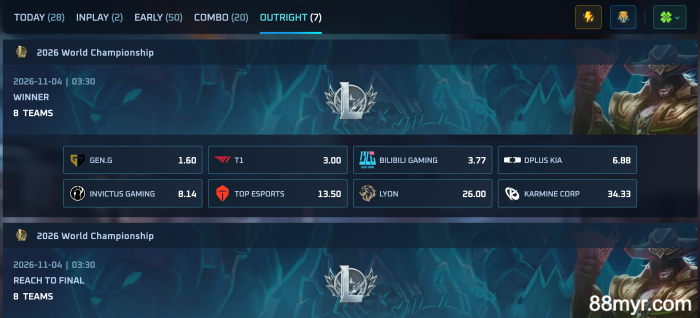
Each PUBG market needs a different kind of research, so choose the one that matches the data you can find. Match winner is the simplest to follow, but it is volatile because a single chicken dinner is shared among 16 or more teams. Outright winner is harder still, since it needs a clear picture of the tournament format, scoring, and how teams hold up over many matches.
Pick the market you can actually analyse in PUBG
Placement and total kills suit bettors who like to track numbers. Placement rewards teams that finish in the top five consistently, so check late-circle results and survival rates. Total kills depends on a team’s kill rate, drop spots, and aggression on each map, so it works best if you follow those details closely.
Start with one or two markets and track how they perform before adding more. If you can’t find stats for a market, skip it, because a guess is not a bet. Sticking to what you understand beats spreading small bets across every option on the screen.
#8. Set a betting budget and track your results
Decide how much you can afford to lose before the event starts, and treat that amount as entertainment spending rather than income. Set a daily or weekly limit, then split it into small, equal stakes so one bad night can’t wipe you out. A good rule is to keep each bet to a small share of your budget, which keeps you in the game through the swings that battle royale results often bring.
Set a strict betting budget and track your results
Keep a simple record of every bet, including the match, market, odds, stake, and result. Review it weekly to see which markets pay off and which ones drain your budget. Most importantly, never raise your stakes to win back a loss. Chasing losses is driven by emotion, not analysis, and it is the fastest way to break your budget. If you hit your limit, stop for the day and come back with a clear head.
Where to play PUBG betting in Malaysia: trusted and reputed platform
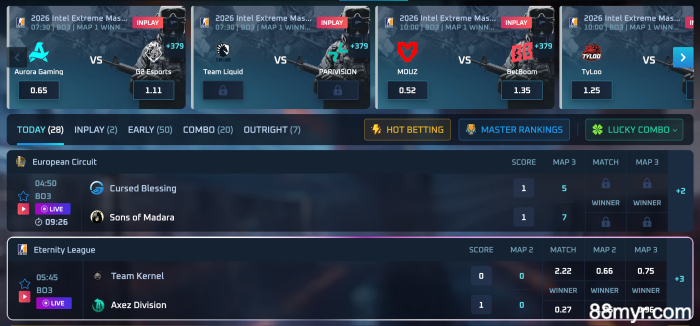
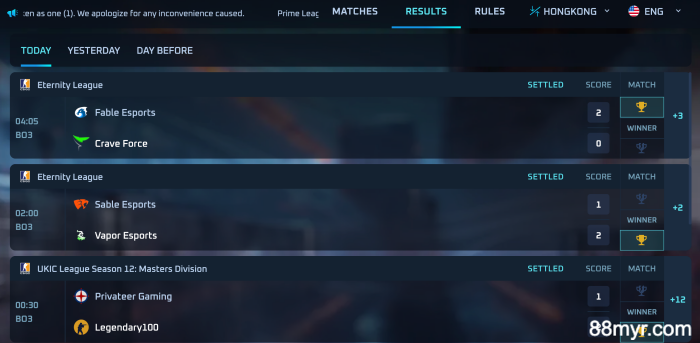
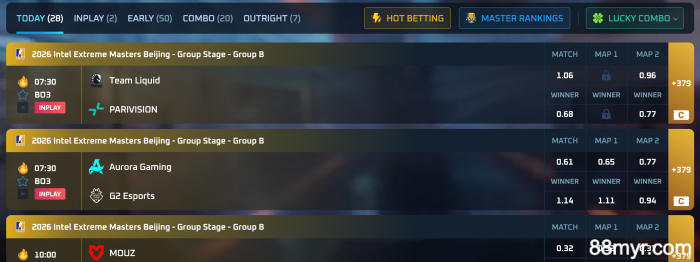
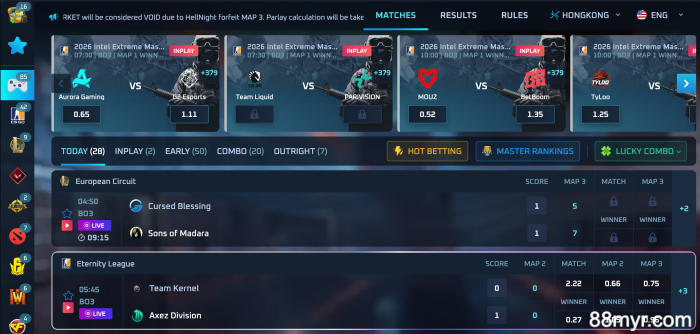
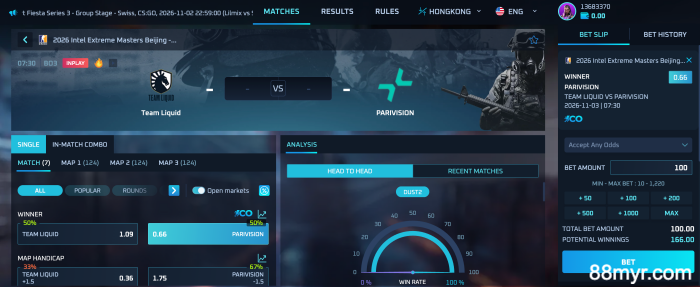
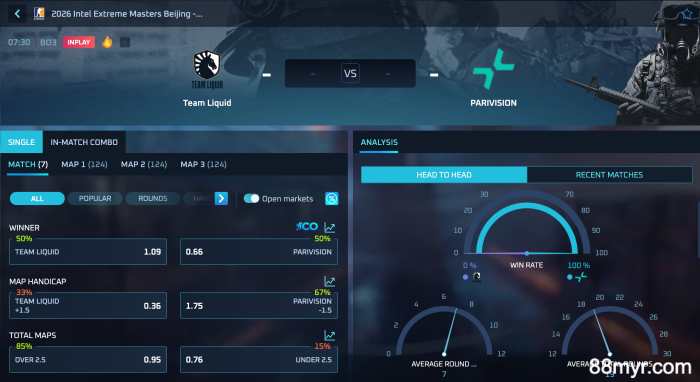
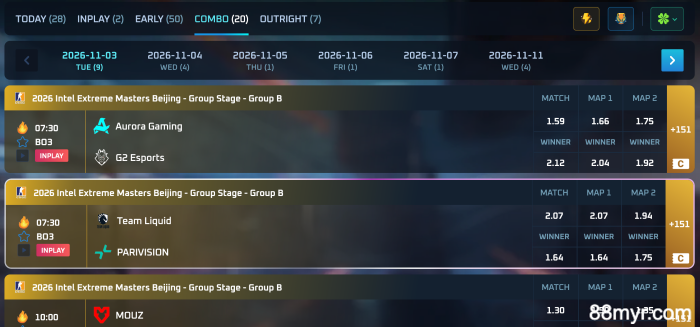
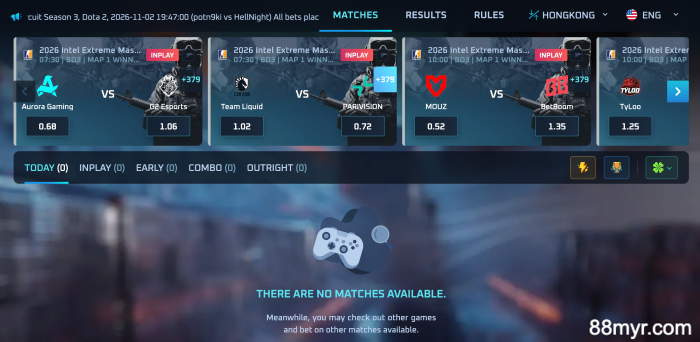
A solid betting plan still needs a dependable place to use it, and M88 online fits that role for Malaysian players. PUBG matches are found under the Esports tab on the main menu, and stakes start at only RM2, which makes it easy to try out your strategy without risking much. Pre-match and in-play markets such as match winner, placement, and total kills can be found there.
Access M88 to play PUBG betting in Malaysia
Getting started takes a few minutes: create an M88 account, log in, and make your first deposit. New players can claim an 188% welcome bonus worth up to RM588, which requires a minimum deposit of RM30 and must be activated within 30 days of signing up. Then open the Esports section, find the PUBG match you’ve analysed, and place your bet.
M88, a trusted and reputed platform to play Esports betting in Malaysia
On the trust front, M88 operates under Tanoa Gaming Limited and holds an Interactive Gaming Licence from the Republic of Vanuatu. If anything goes wrong, support is available 24/7 through live chat, WhatsApp, and email.
Conclusion
The best PUBG betting tips all come down to preparation. Check recent form, player stats, scoring rules, maps, and rosters before every bet, then turn the odds into probabilities to see if the price is worth taking. Stick to markets you understand and keep your stakes inside a set budget.
No amount of research removes the risk, because one unlucky circle can flip a match. Treat betting as entertainment and only wager what you can afford to lose. Betting is for adults aged 18 and over, so check your local laws first. To put these tips to use, M88 is a good place to start.