Get 8 practical 3 Patti tips and tricks for online play, from hand rankings to blind vs. seen betting, side shows, and folding, plus 4 common mistakes to avoid.
3 Patti looks simple, with three cards, a few betting rounds, and the best hand taking the pot. The real skill lies in the decisions between those rounds, such as when to look at your cards, when to raise, and when to quit a hand.
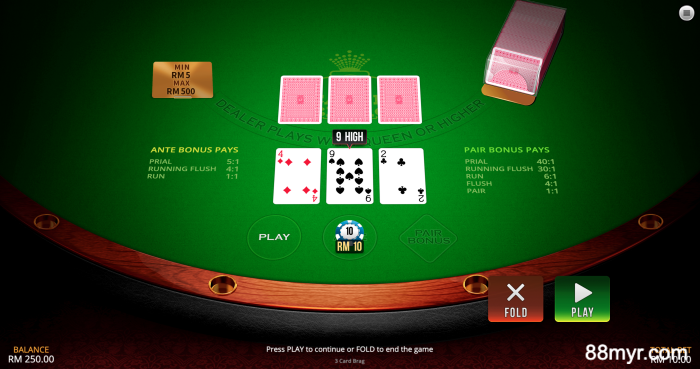
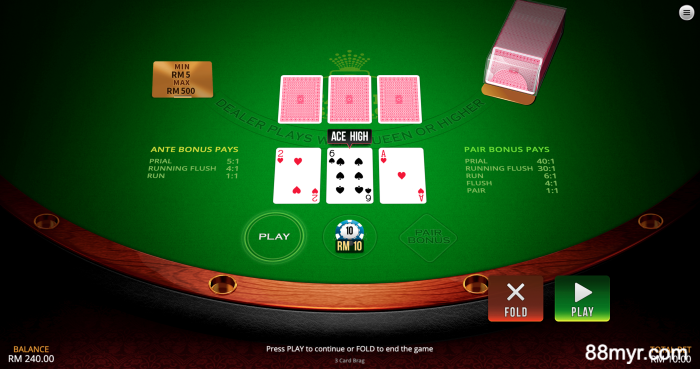
A 9-high hand in 3 Card Brag at M88 with a RM10 Ante, waiting on Play or Fold.
Online tables make those choices sharper. There are no faces to read, and the pace is quick, so how others bet is the only information you get. The tips below cover the habits that matter most for online play, along with the mistakes that cost players chips.
08 Practical 3 Patti tips and tricks for online players
Winning at 3 Patti is mostly about avoiding bad habits and making steady choices. Start with the basics of hand strength, then move on to betting style, reading opponents, and knowing when to step back. Each tip below builds on the one before it.
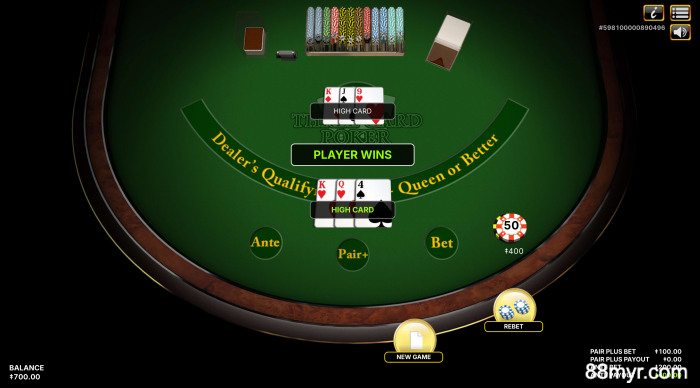
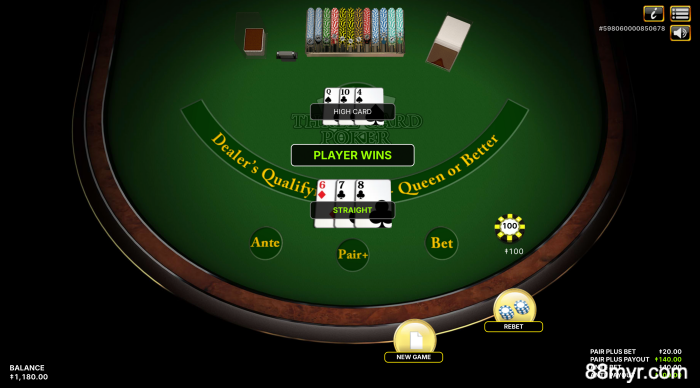
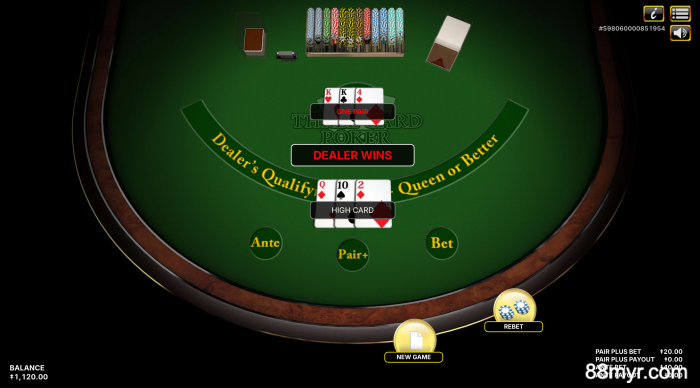
The dealer wins with a pair of Kings against the player’s Queen-high hand.
#1. Learn the ranking of all 3 Patti hands
Before any betting decisions make sense, you need to know where your hand sits, and the 3 Patti hands ranking is the place to start. From strongest to weakest, the order is trail (three of a kind), pure sequence, sequence, colour, pair, and high card. Learning this takes a few minutes and stops you from folding a good hand or overplaying a weak one.
The betting screen of 3 Card Brag, with a RM5 minimum bet and a RM10 chip placed on the Ante.
Odds fall quickly as you move up the list. A high card turns up about 74% of the time, a pair about 17%, a colour about 5%, and a sequence about 3%, while a pure sequence or trail appears only about 0.2% of the time each. Note that A-2-3 is the top sequence and A-K-Q is second, which many beginners get wrong. Some variants such as Muflis flip the order entirely, so check the version before you play.
#2. Adjust your strategy based on your hand
Your hand should shape how you play the round, not just whether you stay in. Strong holdings such as a pair of high cards or better are worth backing with steady raises, since these hands win often enough to justify bigger bets. With a trail or pure sequence, the aim is to keep opponents in the pot long enough to build it, so avoid raising so sharply that everyone folds.
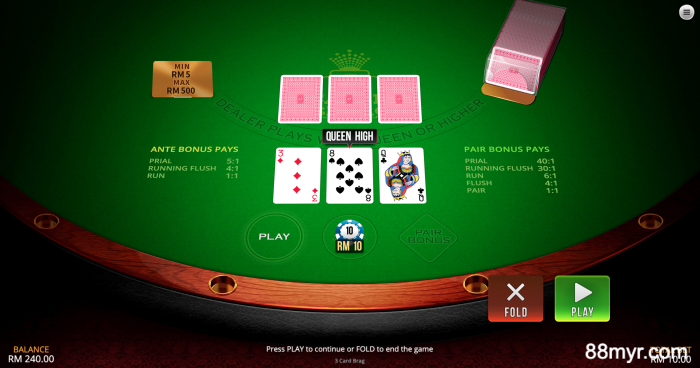
Queen-high with a RM10 Ante is a borderline hand that is worth weighing before choosing Play or Fold.
Middle-strength hands call for more caution. A low pair or a weak sequence can win a small pot, but it is easy to lose a large one with them, so keep your bets modest and watch how others respond. If the betting turns aggressive and your hand is only a high card, treat it as a signal to step back. Matching your bet size to your hand protects your chips over a long session.
#3. Understand when to choose blind or seen betting
Playing blind means betting without looking at your cards, while seen means you have checked them. The trade-off is cost versus information. Blind players usually pay a lower chaal, whereas seen players know their hand but must bet at least double the blind stake. Staying blind for the first few rounds keeps your costs low and gives you time to watch how opponents behave.
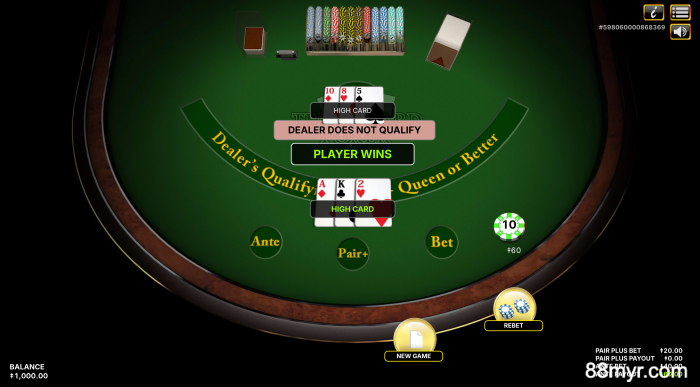
The dealer’s 10-8-5 does not qualify, so the player’s Ace-King high card wins the round.
Look at your cards once the pot grows or the table turns aggressive, because a larger stake is not worth risking without knowing your hand. Relying on one style also makes you predictable. Mixing early blind play with a well-timed look keeps opponents guessing, and it lets you save chips on weak deals before you commit to a strong one.
#4. Assess your hand strength before betting
Once you have looked at your cards, take a moment to judge how strong the hand really is at this table. A pair of fours looks fine on paper, but it can be weak when several players are still in, and the betting keeps climbing. The more opponents left, the better your hand needs to be, because each extra player raises the chance that someone holds something stronger.
The player’s straight beats the dealer’s Queen-high hand for a ₹100 win.
Weight the cost of continuing too. Chaal as a seen player is usually double the blind stake, so a marginal hand gets expensive quickly. If the price of staying is high compared with what the hand can realistically win, it is better to pack. A quick check of your cards, the number of players, and the size of the stake before each bet helps you avoid paying for hands that rarely win.
#5. Read opponents’ betting patterns and habits
Cards stay hidden until a show, so much of the edge in 3 Patti comes from watching how others bet. Online, there are no facial tells, which makes betting behaviour the main clue. Pay attention to who folds early, who raises often, and who stays blind for several rounds. A player who calls round after round may be holding marginal cards, while one who suddenly raises after a quiet stretch often has something real.
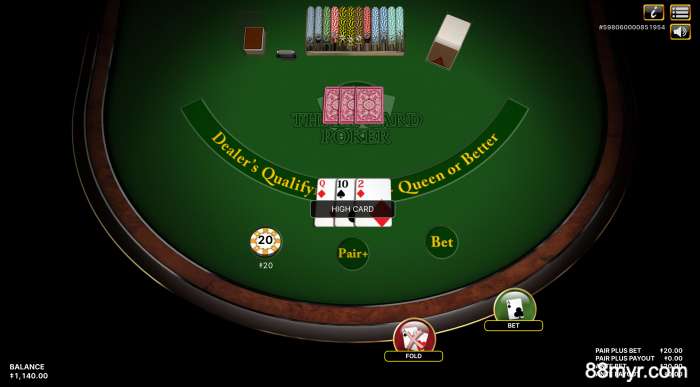
Queen-10-2 shows as a high card, a weak hand that calls for a Fold-or-Bet decision.
Bet sizing gives away information too. Steady, similar bets usually point to a comfortable hand, and a sharp jump can signal either strength or a bluff, so look at the player’s earlier habits before deciding. Position helps as well, since players who act later see more of the betting first. Noting these patterns over a few rounds gives you a clearer picture of when to push and when to back off.
#6. Bluff selectively against cautious opponents
Bluffing means betting as if your hand is stronger than it is, and it works best when the table is ready to fold. Among the M88 casino tips for 3 Patti, targeting cautious opponents, such as players who pack at the first sign of a raise, is one of the most useful. Fewer players in the round also helps, because every extra opponent raises the chance that someone will call you down.
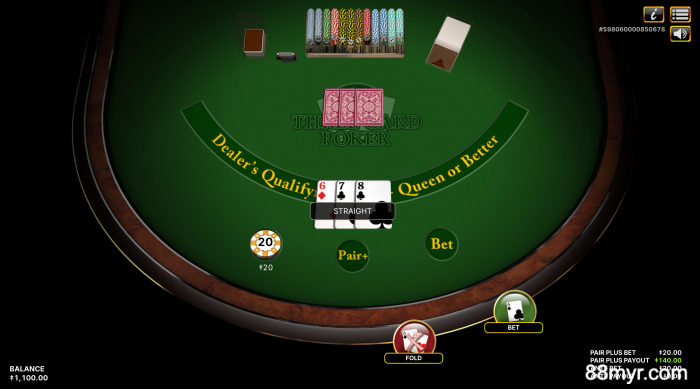
A 6-7-8 straight shows on the table is a strong hand worth backing with a Bet.
Timing matters as much as the target. A confident raise after a few quiet rounds looks believable, whereas constant aggression gets noticed and called. Keep bluffs occasional and size them like your genuine bets so nothing stands out. Also remember that no bluff can rescue a hand that loses at a show, so avoid putting in more chips than you can afford to lose on a bet that depends on a fold.
#7. Request a side show against weaker hands
A side show lets a seen player ask the previous player to compare cards privately before continuing. Only seen players can request one, and the other player may accept or decline. If they accept and their cards are better, you must pack, so the request only makes sense when you have a reason to think their hand is weaker.
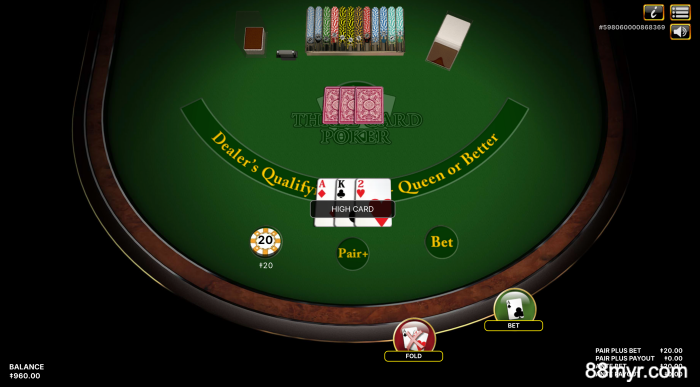
A high-card hand of Ace-King-2 at the table, with the choice to Bet or Fold.
Use what you have observed. An opponent who has played cautiously, called small bets, or hesitated before betting is a better target than one who has been raising firmly. Strong hands of your own, such as a sequence or colour, also make the request less risky. Avoid asking too often, since repeated requests can reveal your style, and do not treat a rival’s request as proof of strength, because players sometimes ask it as a bluff.
#8. Fold weak hands instead of chasing the pot
Folding, also called packing, is the move that protects your chips. A weak hand such as a low high card facing steady raises rarely wins at a show, and every extra call makes the loss bigger. Dropping out early limits the damage to what is already in the pot and leaves you with more chips for hands that are worth playing.
Ace high in 3 Card Brag, a hand strong enough to continue with Play.
The pull to stay in often comes from the pot size or from the chips already spent. Those chips are gone whether you fold or not, so the only question is whether the hand can win from here. Chasing after losses leads to rushed bets, so keep to a session limit and pack when the cards do not support the price of staying in.
04 Common mistakes to avoid while playing online 3 Patti
Even players who know the basics lose chips to a few avoidable errors. These four show up most often at online tables, including those on M88 Malaysia.
The dealer wins with a pair of Kings against the player’s Queen-high hand.
Skipping the table rules: boot amounts, bet limits, and show conditions differ from table to table, and some variants change the rankings. Reading the details before the first deal avoids unexpected bets and misjudged hands.
Chasing losses: raising bets to win chips back usually leads to rushed calls on weak hands, and each extra bet deepens the hole. Set a session limit before you start and leave once you reach it.
Reading too much into a side show request: a request does not prove a strong hand, since some players use it to bluff. Treat it as one clue alongside their earlier betting habits.
Playing on impulse: looking at your cards every round or bluffing constantly makes your style easy to read. Take a few seconds to check your hand, the stake, and the number of players before each bet.
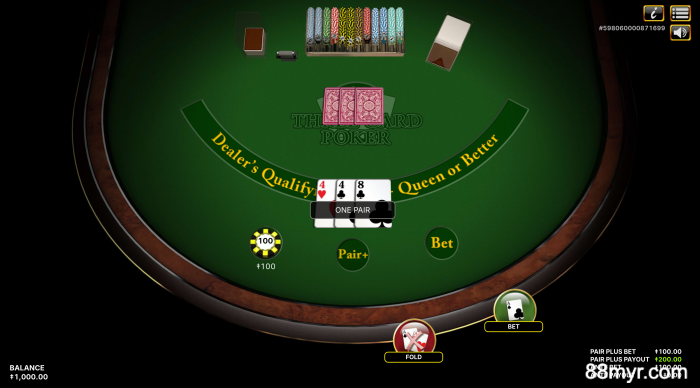
A pair of fours with a ₹100 Ante, a middle-strength hand that calls for a cautious bet.
Avoiding these habits matters as much as any tip above. Check the rules, set a limit, and keep your decisions planned instead of reactive.
Conclusion
Solid 3 Patti tips and tricks come down to a few habits: know the hand rankings, match your bets to your cards, watch how opponents play, and pack when the odds are against you. None of these needs complicated maths. They only need patience and attention, round after round.
Start at low stakes and treat each session as practice. Set a spending limit before the first hand and stop when you reach it, since 3 Patti involves real money. Play only where it is legal, and within a budget you can afford to lose.