Martingale roulette strategy explained: how it works, the pros and cons, and practical points to keep in mind while using the strategy to bet smarter and safer. > 160
Ever wondered if there’s a foolproof way to beat the roulette wheel? The Martingale strategy is one of the most talked-about betting systems in casino gaming, promising to recover every loss with a single win.
But does it actually hold up? In this guide, we will break down what the Martingale strategy is, how it works, its pros and cons, and the key points to keep in mind before trying it at the table.
Live dealer online roulette game at M88 Casino
What is Martingale in roulette?
The Martingale strategy dates back to 18th-century France, originally used for coin-toss games before being adapted for casino betting. The core idea is to double your bet after every loss. When you eventually win, that win recovers all previous losses and leaves you with a small profit equal to your original stake.
It works best on even-money bets, such as: Red or black, Odd or Even, and 1-18 or 19-36. It’s easy to understand, but the promise of guaranteed recovery assumes unlimited funds and no table limit, and in a real casino, neither is true.
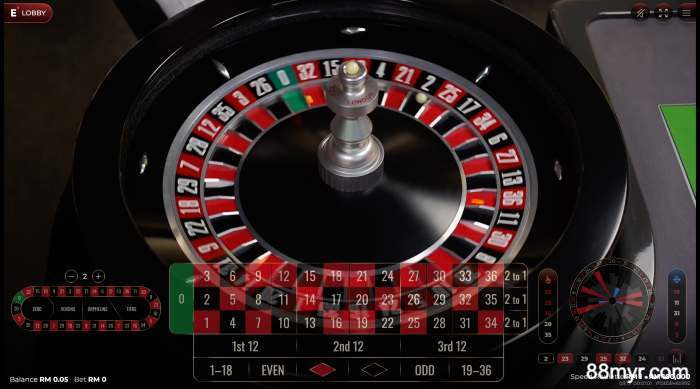
Live dealer table roulette game at M88 Live Casino
How does the Martingale strategy work in roulette?
The Martingale strategy follows a clear, repeatable process, and it’s one of the first systems players look into when learning how to play roulette online for real money. Once you understand the mechanics, it’s easy to see why the system feels so intuitive, and why that same simplicity hides its risks.
Mechanics of the Martingale roulette strategy
Odd, black, and 19-36 betting options won in shown roulette game
Choose an even-money bet: stick to a 50/50 style wager such as red/balck, odd/even, or 1-18/19-36, since the strategy only works cleanly when the payout matches the stake.
Place your base bet: this is your starting wager and the amount you will return to after every win.
Double your bet after a loss: each time you lose, the next bet is doubled, so the eventual win is large enough to cover every prior loss in the sequence.
Keep your base bet after a win: once you win, you pocket the profit and reset back to your original wager size, starting the cycle again.
Repeat the cycle: this process continues indefinitely, with bet sizes rising after every loss and resetting after every win.
Martingale roulette strategy betting example
Here’s how the sequence plays out with a RM100 base bet on an even-money wager, similar to how you’d approach M88 betting on roulette:
Live dealer conducting an online roulette game at M88 betting
Bet Number
Bet Amount
Outcome
Total Loss
Net Result
1
RM100
Lose
RM100
-RM100
2
RM200
Lose
RM300
-RM300
3
RM400
Lose
RM700
-RM700
4
RM800
Win
–
+RM100
After three consecutive losses, the fourth bet wins and covers the full RM700 lost across the previous rounds, leaving a net profit of RM100, exactly equal to the original base bet. This is the appeal of the Martingale roulette strategy in action: one win, however late it arrives, resets the balance and adds a small gain on top.
Pros and Cons of using the Martingale roulette strategy
Like any betting system, Martingale has its strengths and its drawbacks. Before deciding whether it’s right for you, it’s worth weighing what it offers against what it risks.
Rewards of using the Martingale strategy for roulette
Even, black, and 1-18 betting options won in shown roulette game
Easy to learn: the entire system rests on one rule: double your bet after a loss and reset after a win. There’s no complex maths or card counting involved, which makes it accessible even for players new to roulette.
Recovers losses in one win: because each bet doubles the last, one win is enough to wipe out every prior loss in the sequence and still leave you with a profit equal to your original stake.
Works well over short sessions: over a small number of rounds, the odds of hitting a win before a long-lasting streak are reasonably high, which is why the strategy can feel deceptively reliable in short sessions.
Suited to even-money bets: it’s specifically designed for 50/50 style wagers like red/black, odd/even, or high/low, where the payout matches the stake, and the doubling math works cleanly.
Risks of using the Martingale strategy in roulette
Live dealer conducting a speed roulette game with a minimum bet of RM2.5
Bet sizes escalate exponentially: because each loss doubles the next wager, even a modest losing streak can balloon into a very large bet within just a handful of spins, demanding a bankroll far bigger than most casual players bring to the table.
Table limits can cut off recovery: most casinos cap the maximum bet allowed at a table, and once you hit that ceiling, you can no longer double, leaving you stuck with the full accumulated loss.
It doesn’t change the house edge: no betting system alters the underlying probabilities of roulette. Each spin is an independent event, so previous losses have no bearing on your odds of winning the next one.
Losing streaks can be more damaging than the payoff justifies: a single extended run of losses can erase far more than the small, incremental profits the strategy is built to deliver, making the risk-to-reward ratio lopsided over time.
The odds tilt against the player the longer you play: the longer a Martingale sequence runs, the higher the statistical likelihood of hitting a losing streak large enough to result in a net loss, which is why the strategy tends to break down over sustained use.
06 Points to note before using the Martingale roulette strategy
Before putting the Martingale strategy into practice, keep these 06 points in mind, much like the M88 casino tips seasoned players swear by, to play more responsibly and avoid unnecessary losses.
Live dealer conducting online roulette gameplay with a minimum bet of RM2.5
Set a strict budget: decide on a maximum amount you are willing to wager before you sit down, and treat it as a hard limit rather than a target to chase past.
Know the table limits in advance: check the minimum and maximum bets allowed at your chosen table, since hitting the ceiling mid-sequence means you can no longer double and recover your losses.
Prepare for extended losing streaks: even a well-funded session can run into six or more consecutive losses, so factor this possibility into your bankroll planning rather than assuming a win is always close.
Start with low-stakes or demo play: testing the strategy on free or low-minimum stakes lets you understand how quickly bets escalate without risking significant money early on.
Stick to even-money bets only: the strategy is built around 50/50 style wagers like red/black or odd/even; using it on bets with different payout structures throws off the core math.
Treat it as short-term entertainment, not a guaranteed system: the Martingale strategy can produce quick wins over a handful of rounds, but it isn’t designed to beat the house edge over a full session, so it’s best approached with realistic expectations.
Conclusion
The Martingale roulette strategy explained simply: terms double your bet after a loss, and a single win recovers everything you’ve lost, plus a small profit. That simplicity is why it remains popular at the table. But it doesn’t change the house edge; table limits can block recovery, and a long losing streak can outweigh any payoff. It works best in short sessions, though the odds tilt against it over time.
If you try the Martingale roulette strategy, set a firm budget, know your table limits, and be ready to walk away. Used carefully, it can add structure to your play; just don’t rely on it for long-term wins